

Private JOHN HENRY MULDOWNEY
7/15A, Greenhill Road, Winchester (No.13 today)
Family Background
John Henry Muldowney was born in Winchester on 15 April 1898 and was known as Jack to family and friends. His father, Thomas, served in the Army before becoming a policeman in Winchester.
Thomas married Rosabella (Rose) Dowse in Winchester in 1896 and Jack was born two years later when his parents had moved to 7, Greenhill Road, Winchester. Rose went on to give birth to three other children: Ellen, Richard and Edward.
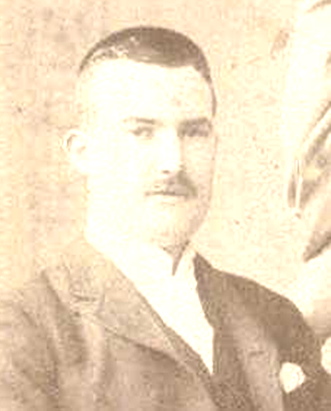
Jack Muldowney's father
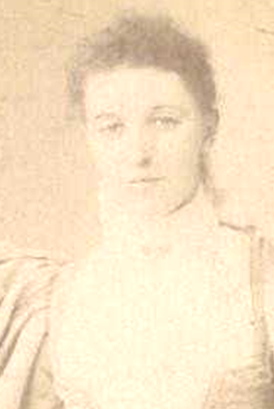
Jack Muldowney's mother
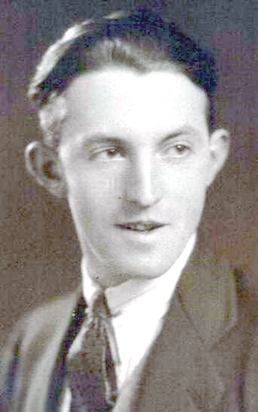
Jack Muldowney's brother
In October 1902 Jack’s father and another police constable tackled an armed gunman in Winchester. The gunman shot PC Muldowney in the wrist during the confrontation, but was then overpowered by the other officer. The wound partially disabled Thomas and both officers were highly commended by the Winchester Watch Committee, the body which oversaw the city police force.
In 1905 seven-year-old Jack Muldowney was enrolled at St Thomas Church of England Boys’ School in Mews Lane. Like his younger brothers later, he had probably previously attended Western Infants School.
In early 1911, Jack left home despite being just 12 years old. It appears he was no longer even in the country as a note in the St Thomas School logbook states that he had ‘left for America’. Although Jack’s parents and younger brothers were still living in Greenhill Road, his sister Ellen had also left home and was living with her grandmother in Winchester.
Today it seems incredible that Jack should have left home so young and that his parents should have allowed him to do so. However, 100 years ago attitudes were very different, and it was not uncommon for young children to leave home. They did so for a variety of reasons – to relieve the pressure on the family budget, to free up space in what were often overcrowded homes, or simply because they did not get on with one or both parents. However, Jack was exceptionally young when he left home and his decision to seek a new life overseas was unusual.
Jack’s Canadian army enlistment papers give some clues to his life after arriving in America. He gave his address as 35, Moreland Street, Roxbury, which was then a suburb of Boston. The enlistment papers also provide a physical description of Jack – he was 5ft 8¾in tall with dark brown hair, grey eyes and a fair complexion. He had a 35in chest, three vaccination scars on his left arm and gave his religious denomination as Church of England. His next of kin was his mother Rose and her address was Tree Cottage, 15A, Greenhill Road, Winchester – the house had been renumbered shortly before the war. His gave his occupation as labourer.
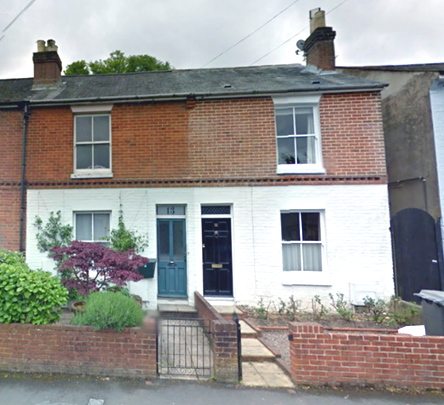
The modern 13, Greenhill Road, Winchester, which was No.7
and later 15A when the Muldowney family lived there. In 1911

In 1911 Jack Muldowney emigrated to the United States
where he lived at 35, Moreland Street, Roxbury, Boston
Great War Record
In June 1916 Jack joined the 140th Battalion, the Canadian Expeditionary Force. After a period of training in Canada he sailed to England in September 1916, arriving early the following month. Jack remained in England for the next seven months, training with different Canadian regiments. He may have had the opportunity to visit his family in Winchester during this period.
In April 1917 Jack Muldowney transferred to the 26th Battalion and joined his unit in France a few weeks later. Jack’s first major experience of combat came at the Battle of Hill 70 (so-called because it rose 70 metres above sea level), near Lens in northern France. He was shot in the thigh by a German sniper on 17 August and evacuated back to England for hospital treatment and to recover. Jack then remained in reserve until April 1918 when he was posted back to his battalion in France.
From the end of July, the 26th Battalion was involved in extensive training for the Battle of Amiens, regarded as the start of the Allied drive to victory in the late summer and autumn of 1918. On 8 August, with more than 500 tanks and 800 aircraft spearheading the assault, British, Canadian, Australian and French troops punched a gap more than 15 miles long and up to eight miles deep (in the case of the Canadians) in the German lines.
This success, however, came at a high price with casualties among the British, Canadian and Australian infantry on 8 August numbering some 8,000. Among them was Private Jack Muldowney who is believed to have been killed in the early stages of the battle as his battalion attacked the village of Marcelcave. Jack was just 20 years old when he died.
Family after the Great War
After the war Thomas and Rose Muldowney continued to live at 15A, Greenhill Road. Thomas died in Winchester in 1934, aged 64. Rose remained in the house until her death in 1956 at the age of 86.
Private John Henry Muldowney was entitled to the British War Medal and the Victory Medal. He is buried at Wood Cemetery, Marcelcave, Somme, France. His name appears on the memorials at St Matthew’s and St Paul’s churches, Winchester, and on the St Thomas School memorial, which today is held at Kings’ School, Winchester.
Activities: What must it have been like for Jack to leave home so young?