

Major JOHN HENRY MORRAH
25, Cranworth Road, Winchester
Family Background
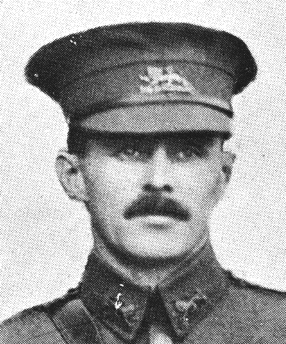
Major John Henry Morrah
John Henry Morrah (above) was born in Derby on 20 July 1875. His father, James, was a Captain in the Army. Several other of John’s relatives and ancestors had also served in the Army, including one who was a surgeon at the Battle of Waterloo in 1815.
John’s father married twice. He had four daughters by his first wife and six children, including John, by his second wife, Mary. In 1888, after retiring from the Army, James Morrah moved with his family to Westgate House, 81, High Street, Winchester. In 1889 he was elected to Winchester Town Council and two years later he became Mayor of Winchester. James died in 1893, aged 61.
It was during this period, from 1888 to around the mid-1890s, that John Morrah’s ties to Winchester were their closest. After joining the Army, he was posted to different locations in Britain and across the Empire and is not believed to have lived in the city again. However, he would undoubtedly have visited his mother when he had the opportunity. From Westgate House she moved to properties in St Cross before setting up home at 25, Cranworth Road, Winchester.
Early Military Career
John Morrah did not go to school locally but instead attended Eastbourne College, Sussex, as a boarder. In 1893, he went to Sandhurst, the Army’s officer training establishment in Berkshire. John left Sandhurst in 1895 and joined The King’s Own Royal Lancaster Regiment the following year. He was promoted to Lieutenant in 1897. During the Second Boer War in South Africa, John commanded a Company of mounted troops. He was badly wounded in December 1901 and invalided home. John was awarded the Queen’s Medal for his services during the campaign.
On 19 November 1903 John married Maud Macgregor in London. Maud’s elder sister had married John’s brother Herbert in 1895 so it is likely that John and Maud knew each other. They lived first in London where a daughter, Marjorie, was born in 1904. Maud gave birth to a son, Michael, in 1907 in Lancaster where, presumably, John was stationed at the time.
It is believed that John Morrah also served in Malta, Hong Kong, Singapore, Burma (modern Myanmar) and, from 1908 to 1910, India. It is not known whether his family accompanied overseas. However, the 1911 Census, compiled after John had returned to England, showed Maud and the two children living in London. In 1912, the year he was promoted to Major. Maud gave birth to a second daughter, Joyce, in Dover where he was stationed at the time.
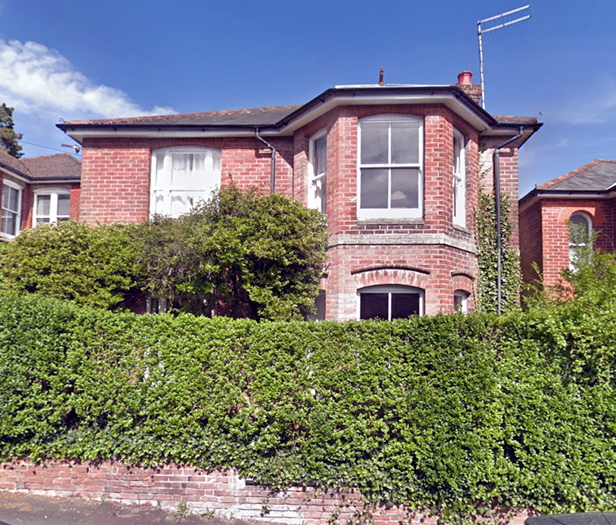
25, Cranworth Road, Winchester – home to John Morrah’s mother and,
following her death in 1920, his sister Mary Grace
Great War Record
When the Great War broke out in 1914 John, by then a Major, was posted to France, arriving there on 23 August. Three days later he fought at the Battle of Le Cateau where his battalion suffered more than 430 casualties in a matter of minutes. Among those killed was the Commanding Officer and John had to take charge of the battalion. An eye-witness to the battle wrote that the men were waiting to have their breakfasts when ‘a tremendous burst of machine-gun fire’ opened on them. Then the German artillery began to shell the battalion’s positions:
At first their fire was short, but they soon found the range and the shells started to burst about thirty yards in front of the leading company. The first burst of fire did not touch the transport and some of the drivers tried to turn their horses round and get them to cover, but the machine guns then appeared to lengthen the range and bullets began to drop amongst them. Then came the shells, and chaos ensued. The first shell hit the cooker; the mess cart was immobilised with the horses dead between the shafts; the remaining horses bolted and some of the vehicles got locked together; others, both horse and vehicles, galloped off in all directions; the machine guns were reported to have been holed and therefore useless. The small dog, for which the men had made a coat out of a Union Jack, was killed as he stood next to the driver of a wagon.
John Morrah saw further action in September. In October his battalion was sent north to Flanders, suffering another 85 casualties while attacking the village of Meteren. On 18 October, John was shot dead by a German sniper near the town of Armentieres as he attempted to signal to officers of a neighbouring regiment. Colleagues reported that he died instantly.
News of John’s death soon reached Winchester and on 7 November 1914 the Hampshire Chronicle published an obituary which included the following tribute from a fellow officer:
He really was a gallant officer, how gallant only we who saw him from day to day can tell, going about among the men with conspicuous coolness when danger was greatest and bullets were thickest – an example of sterling bravery. Today the Regiment that has done so much, and is still going to do more, is the poorer by a gallant officer, an English gentleman, and a sincere and keen soldier.

A newspaper report of Major John Morrah’s death in 1914
Family after the Great War
Maud Morrah, John’s widow, never remarried. She later emigrated to Southern Rhodesia (modern Zimbabwe) where she died in 1959, aged 87. John’s mother continued to live at 25, Cranworth Road until her death in 1920, aged 76.
Major John Henry Morrah was entitled to the 1914 (Mons) Star, the British War Medal and the Victory Medal. He is buried at Le Touquet Railway Crossing Cemetery, Comines-Warneton, Hainaut, Belgium. His name appears on the memorials at St Paul’s, St Matthew’s and St Thomas’s churches, Winchester, and the Eastbourne College and Royal Lancaster Regiment memorials.
Activities: Why do you think John’s battalion suffered so many casualties at Le Cateau? Would they have been safer in trenches? Do you think this is why the soldiers dug trenches?