

Major HAROLD THOMAS FORSTER (or FOSTER) DSO and Bar, MC and Bar
14, Avenue Road, Winchester
Family Background
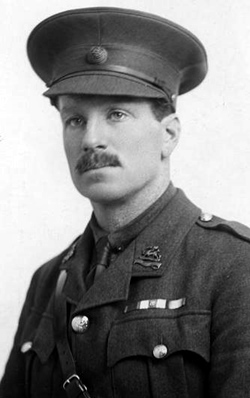
Harold Thomas Forster
Harold Thomas Foster (above) was born in Winchester on 14 November 1878, the son of William and Lydia Foster. Harold’s parents had moved to Winchester from London in the 1870s and went to live at 20, North View. The couple had six children, but tragedy struck in 1883 when Harold’s younger brother Ernest died of burns after his nightshirt caught fire.
Harold’s father spent time in Winchester Prison during 1886, although it is not known why he was jailed. However, the spell in prison appears to have affected his health because in 1887 he died of tuberculosis, aged 39. Another of Harold’s brothers also died in the same year.
By 1891 the family were living at 32, Clifton Road. The 1891 Census reveals how members of the family had changed their names – Harold, for example, had become Thomas H. Forster while his sister Edith became Mary E. Forster. Why they did this is unclear. Perhaps it had something to do with the shame of William Foster being sent to prison? Harold’s mother remarried in 1897 and went to live at 9, Avenue Road, Fulflood with her new husband.
Harold Forster attended St Thomas Church of England Senior Boys’ School before enlisting with the Royal Marines Light Infantry in 1897. Two years later, however, he joined The Royal Berkshire Regiment as a private, serving first in Ireland.
In 1905 Harold married Ethel May Smith in Dublin. They had three sons together. William and Victor are both believed to have been born in Ireland. The third son, Owen, was born in Winchester in 1918, but sadly Harold was killed in action the same year and never met him.
Harold was an excellent cricketer and played five times for Hampshire in 1911. He also played hockey for his battalion.
Great War Record
At the start of the Great War in August 1914, Harold was a Company Sergeant Major with the Royal Berkshires. He was sent to France the same month and fought in the early battles against the German army. Harold was wounded on 30 October, but after recovering he was selected to become an officer. He was awarded the Military Cross for bravery in August 1916.
Harold fought in two of the biggest battles of the Great War – the Battle of the Somme in 1916 and the Battle of Passchendaele in 1917. He showed great bravery in both and won further honours, including the Distinguished Service Order. The Army published an account of his gallantry, known as a citation, which stated that Harold ‘set a fine example of courage and resource to all’.
Harold wrote several letters home to his wife Ethel, including this one:
My Darling Kid,
I was looking forward to a letter today but there is no mail, so we are all disappointed. Never mind, perhaps we shall do better tomorrow. It’s been raining nearly all the time since I wrote yesterday and the place is awful. We had a dugout fall in on three men this morning owing to the rain, but we dug them out in time. The trenches are rotten today.
We have had some good news today so altogether we are doing grand. Our new armoured cars are doing well evidently.
Well I have no news Kiddie dear.
Kiss Vic for me.
With all my love to you.
Your loving husband
Harry
At some point in 1917 or 1918 Harold and Ethel moved to 14, Avenue Road, Fulflood. At around the same time, Harold was promoted to Major and transferred to the Northamptonshire Regiment. He was killed on 29 May 1918 after a German artillery shell exploded beneath his horse.
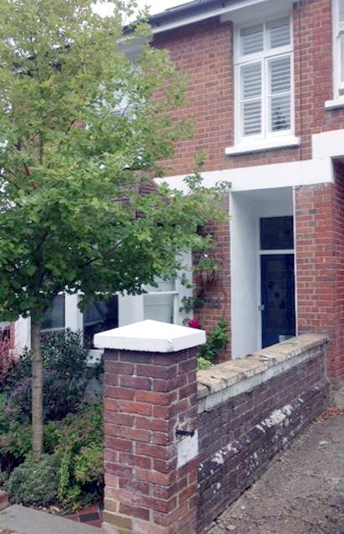
14, Avenue Road, where Harold Forster
and his wife Ethel moved in 1917 or 1918
Major Harold Thomas Forster was a highly decorated soldier. He won both the DSO and MC twice and was also entitled to the 1914 (Mons) Star, the British War Medal and the Victory medal. He is buried at Terlincthun British Cemetery, Wimille, France and is mentioned on the memorials at St Matthew’s and St Paul's churches, Winchester. His name also appears on the St Thomas Church of England Boys’ School memorial, now held at Kings School, Winchester, and the memorial at the Aegis Cricket Bowl, Southampton.
Activities: What do you think made Harold Forster such a good soldier? What does the letter to his wife tell you about conditions in the trenches?