

Lieutenant JAMES ROBERT DENNISTOUN
The Lodge, Bereweeke Road, Winchester (no longer stands)
Family Background
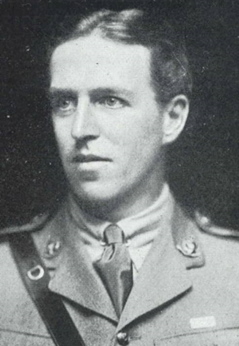
James Robert Dennistoun
James Robert Dennistoun (above) was born in New Zealand on 7 March 1883. His parents, George and Emily Dennistoun, both came from wealthy families. They had married at St Bartholomew’s Church, Hyde, Winchester, in 1879 and went to live at Hyde Lodge, Worthy Lane, Winchester.
The Dennistouns moved to New Zealand shortly afterwards to take over a sheep station at Peel Forest on South Island. It was here that James was born in 1883 and his brother, George Jnr, the following year. In 1898 James travelled to England to become a pupil at Malvern College, Worcestershire. He remained at the school until 1901 when he returned to New Zealand to help run the sheep station.
James loved the outdoor life and he became an accomplished mountaineer. In 1911, he accompanied Captain Robert Scott on his expedition to the South Pole and was put in charge of the mules.
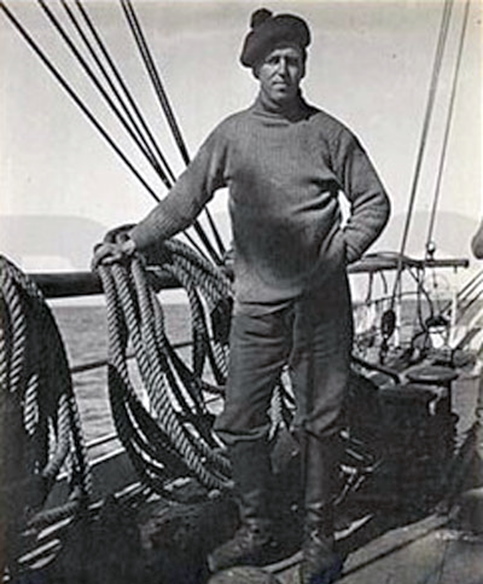
James Denniston aboard Terra Nova on
Captain Scott’s South Pole expedition of 1911-12
Once home, James took up mountaineering and in 1910 he became the first non-Maori to climb Mitre Peak, which rises 5,550ft above Milford Sound, today one of New Zealand’s most famous tourist destinations. His notebooks and diaries from this period were published in 1999 as The Peaks and Passes of JRD.
Great War Record
After the outbreak of war, James sailed to England to volunteer for military service. He arrived in April 1915 and went to stay with relatives in Winchester. He joined a cavalry regiment as a 2nd Lieutenant and was posted to France in November 1915 after being promoted to Lieutenant.
In June 1916 James transferred to the Royal Flying Corps (which became the Royal Air Force in 1918). His cousin, Lieutenant Herbert Russell, was already serving as a pilot in James’s squadron and the pair were together in a plane on James’s first mission on 26 June 1916. The aircraft was attacked by three German planes over northern France and caught fire. James suffered machine-gun bullet wounds to his stomach. The plane crash-landed and James and Herbert were taken prisoner.
James was admitted to hospital on the same day and operated on. He remained there until 28 July when he was moved to another hospital before being sent by train to a prisoner-of-war camp in Germany, on 3 August. However, his wounds were never treated during the 36-hour journey and he died on 9 August, aged 33.
Family after the Great War
James’s parents returned to England in 1918 and went to live at The Lodge in Bereweeke Road, Winchester. They would have ensured that James’s name appeared on the memorials at St Paul’s and St Matthew’s churches and in the Winchester War Service Register.
Lieutenant James Robert Dennistoun was entitled to the 1914-15 Star, the British War Medal and the Victory Medal. He is buried in the Niederzwehren Cemetery, Kassel, Germany. His name (spelt Dennistown) appears on the memorials at St Matthew’s and St Paul’s churches.
Activities: Why do you think that James Dennistoun, a New Zealander, volunteered to serve in the British armed forces? Find out more about Captain Scott’s Antarctic expedition of 1911-12.