

Private JOHN HENRY MULDOWNEY
7/15A, Greenhill Road, Winchester (No.13 today)
Service number 818241. 26th Battalion, Canadian Infantry (New Brunswick Regiment)
Killed in action, France, 8 August 1918
Life Summary
John Henry Muldowney was born in Winchester on 15 April 1898. The son of Thomas William and Rosabella Muldowney, he was one of four children and known as Jack to family and friends. His father, who served as a soldier and then as a policeman in Winchester, became something of a local celebrity after being shot while tackling a gunman. Jack emigrated to the United States in his early teens and lived for several years in Boston. In 1916, aged 18, he travelled to Canada to enlist with the Canadian Expeditionary Force with whom he served on the Western Front until his death in August 1918.
Family Background
Jack’s father Thomas was born in Winchester in 1872. Thomas’s own father, John (1818-1891), had been born in Dublin and went on to serve in the 22nd Regiment of Foot, reaching the rank of Sergeant. After being admitted as a Chelsea Pensioner in 1852 John went on to serve as a Sergeant in the Militia. In the 1861 Census he was living in Winchester with his wife Ellen (née Budd) – who was 17 years his junior - and three young children at 12, North View.
In 1881 John and Ellen were still living at 12, North View along with their three daughters and nine-year-old Thomas. On leaving school in 1887, Thomas joined the Royal Marines Artillery with the service number 3423. However, on 3 August 1893, he bought himself out of the Army and joined the police force. John Muldowney died in 1891 (possibly in Fareham lunatic asylum), but Thomas and his mother continued to live at 12, North View.
In 1896 Thomas married 23-year-old Rosabella Dowse in Winchester. Born in Southampton on 27 December 1872, Rosabella – known as Rose - was listed in the 1881 Census living at 64, Water Lane, Winchester, under her mother Priscilla’s surname of Sandom. By the 1891 Census, however, she was known as Rosabella Dowse, having taken her stepfather James’s name. Her occupation was domestic servant and she lived with a family called the Flights at their home at 91, High Street, Winchester.
Rose gave birth to three other children in addition to Jack: Ellen, known as Nellie, in 1897, Richard Ernest in 1901 and Edward Stanley in 1905. By the time that Jack was born, the Muldowneys had moved to 7, Greenhill Road, Winchester, which was the family’s address in the 1901 Census. Also living at the house was Jack’s 63-year-old grandmother, Ellen, who was recorded as being a retired monthly nurse. Women of this period were expected to rest in bed or at home for extensive periods after giving birth and care was provided either by female relatives (usually the mother or mother-in-law) or, for those who could afford it, by the monthly nurse. These weeks of confinement or ‘lying-in’ ended with the re-introduction of the mother to the community in the Christian ceremony of the churching of women.
On 24 October 1902 Thomas Muldowney and another police constable tackled an armed gunman called Howard Brunless during an incident in Winchester. Brunless shot PC Muldowney in the wrist during the violent confrontation but he was then overpowered by the other officer. The wound partially disabled Thomas and both officers were highly commended by the Winchester Watch Committee, the body which oversaw the city police force.
In 1905 seven-year-old Jack Muldowney, still living at 7, Greenhill Road, was enrolled at St Thomas Elementary Boys’ School in Mews Lane. Like his younger brothers later, he had probably previously attended Western Infants School.
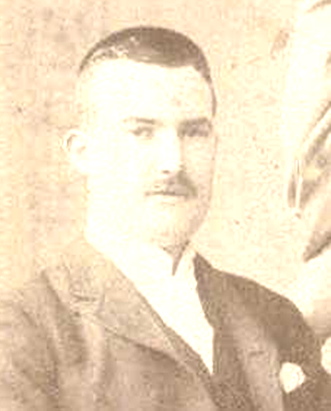
Jack Muldowney's father
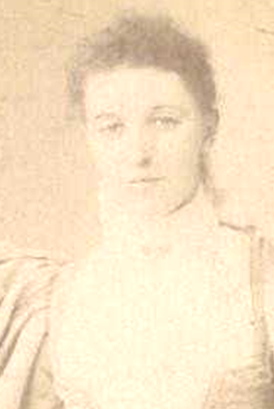
Jack Muldowney's mother
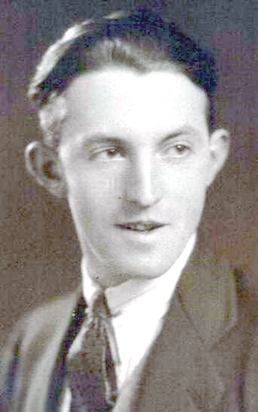
Jack Muldowney's brother
The years 1911-12 were a turbulent period for the Muldowney family. Although still only 12 years old, Jack left home in the early part of 1911 and was not recorded living at home in the census taken in April. In fact, it appears he was no longer even in the country as a note in the St Thomas School logbook states that he had ‘left for America’. Although Jack’s parents and younger brothers were still living in Greenhill Road, his sister, Ellen, had also left home and was living with her grandmother Ellen at 7, St John’s Hospital (South), Winchester, and working as an apprentice dressmaker. Ellen Snr was recorded living at St John’s as an inmate and she died there later the same year. The following year Thomas Muldowney, still aged only 39, resigned from the police force.
Today it seems inconceivable that Jack Muldowney should have left home so young and that his parents should have allowed him to do so. However, 100 years ago attitudes were very different and it was not uncommon for young children to leave home. They did so for a variety of reasons – to relieve the pressure on the family budget, to free up space in what were often overcrowded homes, or simply because they did not get on with one or both parents. That said, Jack was exceptionally young when he left home and his decision to seek a new life overseas was unusual and would not have been taken lightly.
Jack’s enlistment papers from 1916 give some clues to his life after arriving in America. He gave his address as 35, Moreland Street, Roxbury, which was then a suburb of Boston in the state of Massachusetts. Pay records show that after enlisting Jack regularly sent money ($20) to his ‘sister-in-law, Mrs E. Muldowney’, who was living at 35, Moreland Street. Mystery surrounds the identity of Mrs E. Muldowney who would have had to have married one of Jack’s brothers to have been his sister-in-law. However, no trace can be found of either brother moving to America, besides which they were surely too young? The possibility that the pay record was wrong and that the mystery woman was in fact Jack’s sister Ellen can probably also be discounted as she married in Winchester in 1919.
The papers also provide a physical description of Jack – he was 5ft 8¾in tall with dark brown hair, grey eyes and a fair complexion. He had a 35in chest, three vaccination scars on his left arm and gave his religious denomination as Church of England. His next of kin was his mother, Rose, and her address was Tree Cottage, 15A, Greenhill Road, Winchester – the house had been renumbered shortly before the war and is the one listed in the Winchester War Service Register (WWSR). His stated occupation was labourer.
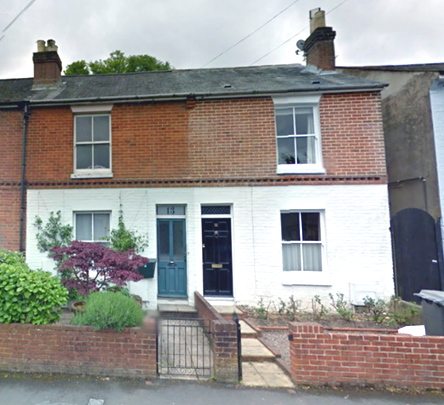
The modern 13, Greenhill Road, Winchester, which was No.7
and later 15A when the Muldowney family lived there. In 1911

In 1911 Jack Muldowney emigrated to the United States
where he lived at 35, Moreland Street, Roxbury, Boston
Great War Record
On 14 June 1916, less than two months after his 18th birthday, Jack travelled to St John in the Canadian province of New Brunswick where he joined the 140th Battalion (St John’s Tigers) the Canadian Expeditionary Force with the service number 818241.
Canadian Army records from the Great War are, unlike those for British servicemen, extensive and well preserved. This has allowed us to build an accurate picture of Jack Muldowney’s military service. After enlisting he underwent a period of training in Canada before sailing to England aboard the SS Corsican on 25 September 1916. Interestingly, he was sentenced to 28 days detention earlier that month for being absent from duty which raises the question: was this because he returned to Boston to visit friends or relatives before heading off to war?
Jack arrived in England on 6 October 1916. On 4 November he was transferred to the Royal Canadian Regiment (RCR) and Princess Patricia’s Canadian Light Infantry (PPCLI) Reserve for further training at Caesar’s Camp at Shorncliffe, near Seaford, on the Sussex coast between Eastbourne and Brighton. Two mobilisation camps (North and South) were constructed at Seaford between 1914 and 1915 which initially served as accommodation and training bases for volunteers of Lord Kitchener’s Third Army. The camps were later used for the same purpose by soldiers of the Canadian Expeditionary Force.
On 7 December 1916 Jack was admitted to Raven’s Croft Military Hospital in Seaford suffering from bronchitis, probably brought on by conditions at his camp. He was discharged on New Year’s Eve. January 1917 saw Jack transferred twice, first to the 7th Reserve Battalion and then to the 13th Reserve Battalion. On 20 April 1917 he transferred once more, this time to the 26th Battalion (known as The Fighting 26th, such was its reputation) which had been serving on the Western Front since 1915. Jack joined his unit in France towards the end of the following month.
Fresh from fighting at the Battle of Arras, which saw the Canadians capture Vimy Ridge, the 26th Battalion formed part of 5th Infantry Brigade, 2nd Canadian Division. Casualties during the Arras campaign had been heavy and Jack Muldowney was undoubtedly one of many men sent out to fill the depleted Canadian ranks.
Jack’s first major experience of combat came at the Battle of Hill 70 (so-called because it rose 70 metres above sea level), near the coal mining town of Lens in northern France. The Canadian attack on the German stronghold opened on 15 August 1917 and was aimed at diverting enemy troops from the heavy fighting further north at the Third Battle of Ypres. The Canadians succeeded in capturing most of their objectives on the slopes of Hill 70 but then had to face German counterattacks over the following days. The fighting, often hand-to-hand, was brutal, even by Great War standards and the Germans’ use of poison gas left the Canadians gasping for air inside their restrictive respirators and struggling to see the advancing enemy through their fogged-up goggles.
On 17 August, as the Canadians fought to repel the repeated enemy onslaughts, Jack Muldowney was shot in the thigh by a German sniper and taken to a Casualty Clearing Station where a doctor removed the bullet. He was evacuated back to England and taken to Tooting Military Hospital in south London for treatment before being transferred to the Canadian Convalescent Hospital at Hillingdon House, Uxbridge, on 31 August.
On 25 September, his wound healed, Jack was discharged from hospital and transferred two days later to the 3rd Canadian Command Depot. Jack’s wound meant that he did not take part in the Third Battle of Ypres in which the 26th Battalion distinguished itself during the capture of Passchendaele village in November 1917.
On 7 December Jack was declared fit for duty and sent to the 13th Reserve Battalion at Seaford shortly afterwards. He then spent more than three months in reserve before being transferred back to the 26th Battalion on 30 March 1918 after the Germans launched Operation Michael, the first of their spring offensives. On 20 April he joined up with his unit which was holding trenches near the village of Blaireville, south of Arras. The battalion spent the following three months in and out of the front line around Blaireville which was comparatively quiet as the Germans had switched the focus of their offensives to other parts of the Western Front.
From the end of July, the 26th Battalion was involved in extensive training for the Battle of Amiens, widely regarded as the start of the Allied drive to victory in the late summer and autumn of 1918. Surprise was a key element in the lead up to the battle, with troops only moved at night and fake movements made during the day to mask the Allies’ actual intent. Significantly, the Canadian Corps – regarded by this stage of the war as the shock troops of the British Expeditionary Force – only moved south to the Amiens sector on 7 August, the day before the battle began.
The results of the battle, particularly on the first day, exceeded Allied commanders’ wildest expectations. With more than 500 tanks and 800 aircraft spearheading the assault, British, Canadian, Australian and French troops punched a gap more than 15 miles long and up to eight miles deep (in the case of the Canadians) in the German lines on 8 August. Progress thereafter was slower, possibly because the rapid gains of the infantry had outrun the supporting artillery while many of the mechanically vulnerable tanks had broken down. Nevertheless, the Allied success on the opening day led General Erich Ludendorff to describe 8 August 1918 as ‘the black day of the German army in the war’.
This success, however, came at a high price with casualties among the British, Canadian and Australian infantry on 8 August numbering some 8,000. Among them was Private Jack Muldowney who is believed to have been killed in the early stages of the battle as his battalion attacked the village of Marcelcave. Jack was just 20 years old when he died.
Family after the Great War
In February 1919, the sum of $23 and 78 cents was sent to his father Thomas in respect of his effects. Thomas himself had also fought in the war. He re-enlisted with the Royal Marines Artillery in August 1914 and served in France.
After the war Thomas and Rose Muldowney continued to live at 15A, Greenhill Road. Thomas’s occupation is unknown, but he died in Winchester in 1934, aged 64. Rose remained in the house until her death in 1956 at the age of 86. Jack’s sister Ellen married John Sampson in Winchester in 1919 and in 1927 the couple were recorded living in Sutton Scotney. She died in September 1956, aged 59.
Neither of Jack’s brothers are mentioned in the WWSR so presumably they did not serve in the Great War. In June 1928 Edward Muldowney married Kathleen Tomlin in Andover. The couple had two sons: Kenneth born in November 1928 and Derek born in December 1929. In 1933 the family were living in Dummer, near Basingstoke, but in July of that year Edward died. He was just 28 years old. His wife died in Andover in March 1993 at the age of 91. Richard Muldowney married Gladys Winn in London in March 1940 but it is not known if they had any children. Richard died in September 1968, aged 67.
Medals and Memorials for John Henry Muldowney
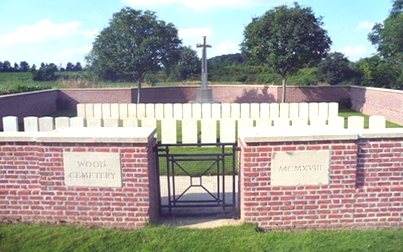
Wood Cemetery, Marcelcave, Somme, France
Private John Henry Muldowney was entitled to the British War Medal and the Victory Medal. He is buried at Wood Cemetery (above), Marcelcave, Somme, France (GR. A. 2). His name appears on the memorials at St Matthew’s and St Paul’s churches, Winchester, and on the St Thomas School memorial, which today is held at Kings’ School, Winchester.
Additional sources
- https://central.bac-lac.gc.ca/.item//?op=pdf&app=CEF&id=B6467-S008
- https://www.canada.ca/en/department-national-defence/services/military-history/history-heritage/casualty-identification-military/battle-hill-70-1917.html
- https://www.veterans.gc.ca/eng/remembrance/memorials/canadian-virtual-war-memorial/detail/278243
- http://saintjohnlibrary.com/research/overview.html
- http://www.blupete.com/DJ%20&%20Malcolm/War%20Diary%2026th.htm#Apr'18