

Signaller BASIL JACK FIFIELD
Winford, 1, Elm Road, Winchester
Service number 24686. 1st Battalion, The Hampshire Regiment
and 14th and 15th (Service) Battalions, The Hampshire Regiment
Killed in action, Belgium, 17 August 1918
Life Summary
Basil Jack Fifield was born in Winchester on 31 August 1897, the second of Ernest and Charlotte Fifield’s three children. Known as Jack to family and friends, he worked as a railway clerk and enlisted as a Signaller in the Army during the Great War. Jack served with three battalions of the Hampshire Regiment before being killed in August 1918.
Family Background
Jack Fifield’s parents married in Bromley, Kent, in 1895. His father Ernest, the son of a gamekeeper, had been born in Micheldever, Hampshire, in 1869. Ernest worked as a clerk for the London and South Western Railway at the company’s offices in Eastleigh and by 1918 was head accountant in the Carriage and Wagon Department. Jack’s mother was born Charlotte Wren in Clifton, Bristol, in 1869. She was a National Schoolteacher in Bristol before marrying Ernest Fifield. The couple’s other children were Queenie, born in 1896, and Nina, born in October 1902.
In 1901 the Fifields lived at 3, St Paul’s Terrace, Upper Stockbridge Road, Winchester (St Paul’s Hill today), and they were still there in 1911 when they employed a live-in female domestic servant. In 1914 their neighbours at 2, St Paul’s Terrace were Andrew and Florence Bogie. Andrew also served with the Hampshire Regiment in the Great War and died in Turkish captivity after the siege of Kut-al-Amara in Mesopotamia. Further up the hill at No.10 lived Eric Rule who served alongside Andrew Bogie in the war. He was killed in action in 1916.
Jack enrolled at St Thomas Senior Church of England Boys’ School in Winchester in August 1906. (He is not, however, mentioned on the school’s war memorial.) In 1914 his sister Nina entered the County High School for Girls in Cheriton Road (known as The Westgate School today).
Jack followed his father into the service of the London and South Western Railway. In March 1914 he was working as a junior clerk in the Locomotive Accounts Office in Eastleigh, earning £26 a year. Two years later - when the family moved to their new home, Winford, 1, Elm Road, Fulflood - his annual salary had risen to £60.
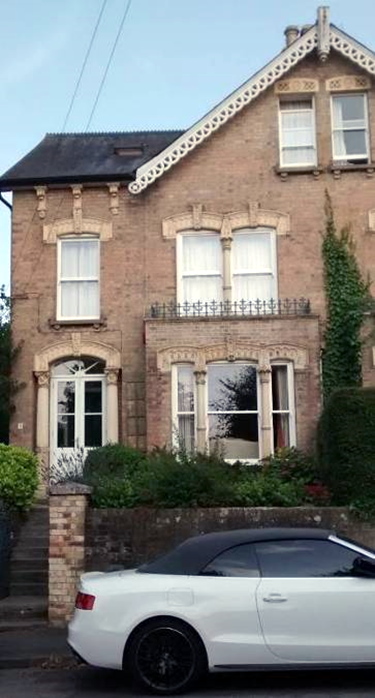
1, Elm Road, Winchester - Jack Fifield moved here
with his family in 1916
Great War Record
Jack Fifield was too young to volunteer for military service when the Great War broke out. In late 1915, after turning 18, he may put his name forward under the Derby Scheme, which allowed a man to ‘attest’ his willingness to fight, enabling him to be called up later. Alternatively, he may have been among the first wave of young men conscripted into the armed forces in early 1916.
Jack entered military service with the Hampshire Regiment on 25 May 1916. After a period of training he joined the 1st Battalion on the Western Front in March 1917 as a signaller.
Jack’s work involved providing signals communications back to his unit. Wired telephones were used where possible, but this meant laying landlines which was dangerous work due to enemy shelling.
Jack probably took part in the 1st Battalion’s attack near the French village of Fampoux on 9 April 1917, the opening day of the Arras Offensive. At some point later that year he was transferred to the 14th (Service) Battalion, one of Lord Kitchener’s New Army units raised in 1914 and 1915. Jack’s obituary in the Hampshire Regimental Journal states that he saw action at Ypres, but whether that was with the 1st Battalion or the 14th is not known. Both battalions took part in the Third Battle of Ypres (better known as Passchendaele), but it was the 14th Battalion which saw more of the fighting, distinguishing itself on 31 July 1917, the opening day of the offensive.
The 14th Battalion was disbanded in February 1918 and Jack Fifield was transferred once more, this time to the Hampshire Regiment’s 15th Battalion, another New Army unit. The 15th Hampshires were heavily involved trying to stem the German Spring Offensive in March 1918 during fighting to the north of the town of Bapaume, in the Somme valley.
The following month the 15th Hampshires moved to Flanders where, on 9 August, they fought a fierce engagement at La Clytte, near Ypres, losing 42 officers and men killed or missing along with 104 wounded. Jack Fifield survived this but was killed a week later, on 16 August, when a German shell exploded in his trench, apparently while the battalion was out of the front line. He was just a few days short of his 21st birthday.
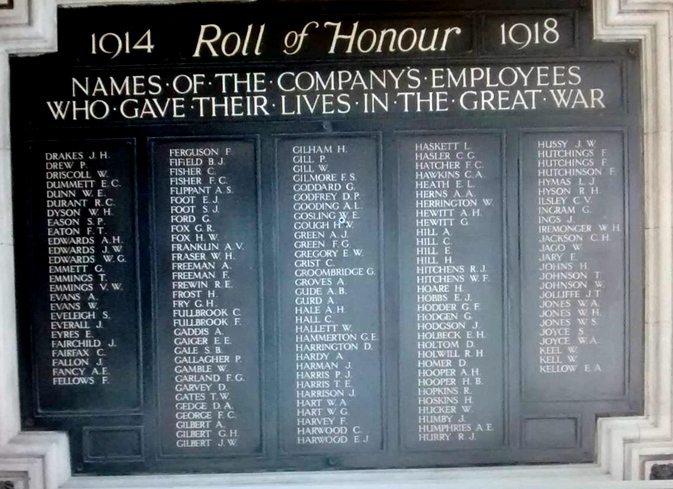
The Roll of Honour at Waterloo Station commemorating
the London and South West Railway workers – including Jack Fifield –
who gave their lives in the Great War
His obituary in the Hampshire Regimental Journal of September 1918 states:
Signaller Basil (Jack) Fifield, Hampshire Regiment, killed in action on August 16th, was the only son of Mr and Mrs E. W. Fifield, of Winford, Elm Road, Winchester, who received the official notification of his death in action on Thursday. Private information had reached them a few days previously that Signaller Fifield was killed in the trenches by shell fire, a chum of his (Pte. Hughes, son of Mr and Mrs Hughes of Avenue Road, Winchester) having observed his dead body being brought in on a stretcher. Signaller Fifield, who was only 20 years of age (he would have been 21 on August 31st), joined up in May 1916, and went overseas in March of last year. During that seventeen months on active service he was in the thick of the heavy fighting, first at Ypres, and subsequently at Peronne. He was killed on Mount Hamel. Before enlisting, he was in the office of his father, who is the head accountant in the Carriage and Wagon Department of the London and South-Western Railway, Eastleigh, and enjoyed the esteem of many friends, both at Eastleigh and Winchester.
The obituary is mistaken when it gives Jack Fifield’s place of death as Mount Hamel. The Winchester War Service Register (WWSR) states that he died at Kemmel, the sector near Ypres in Belgium where the 15th Battalion was fighting at the time he was killed and that is almost certainly correct. The WWSR also gives Jack’s date of death as 17 August, rather than the 16th and given the previous error in the obituary this biography uses the later date.
Family after the Great War
Jack’s mother Charlotte served as a volunteer British Red Cross nurse throughout the war, clocking up 3,258 hours of service in hospitals and sanatoriums in Winchester and Shawford.
After the war, the Fifields gradually moved away from Winchester. Jack’s elder sister Queenie married Herbert Davidge in the city in 1919, but by 1927 they were living in Swaythling, Southampton. His younger sister Nina married Donald Laverty in 1928 in Southampton where she eventually died, aged 76, in 1978.
In 1939 Jack’s parents, then both aged 70, were living at 29, Wellbeck Avenue, Southampton, together with 18-year-old Brian Davidge, the son of Queenie and Herbert. Ernest Fifield died in Southampton in 1965, aged 96.
Medals and Memorials for Basil Jack Fifield
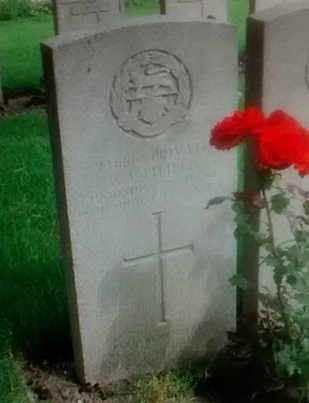
Jack's Grave in Lijssenthoek Military Cemetery,
Poperinge, West Flanders, Belgium
Signaller Basil Jack Fifield was entitled to the British War Medal and the Victory Medal. He is buried at Lijssenthoek Military Cemetery (grave pictured right), Poperinge, West Flanders, Belgium (GR. XXV. E. 27A.). Jack is commemorated on the memorials at St Paul’s and St Matthew’s churches, Winchester. His name is also inscribed on the Roll of Honour at Waterloo Station commemorating the workers of the London and South Western Railway Company who gave their lives in the Great War. He was among the company’s men remembered at a commemorative service held at St Paul’s Cathedral in 1919.