

Company Sergeant Major HENRY THOMAS CHURCHER M.M.
3, Avenue Road, Winchester.
Service numbers 3303 and 201109. 2/4th Battalion, The Hampshire Regiment.
Died of wounds, France, 19 September 1918
Life Summary
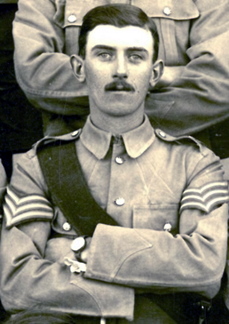
Henry Thomas Churcher
Henry Thomas Churcher was born on 11 March 1891 in Bemerton, Wiltshire, the eldest son of Lot and Elizabeth Churcher. In the early 1890s the family moved to Winchester where Henry, known as Harry to family and friends, went to school. He became a gardener before enlisting with the Hampshire Regiment when Britain went to war in 1914. He quickly won promotion and reached the rank of Company Sergeant Major in just a year. He won the Military Medal shortly before being killed in action in France, just two months before the war ended.
Family Background
Henry’s father Lot was born in 1865. His birthplace is listed both as Romsey (1871 Census) and Fareham (1911 Census) although the England and Wales Birth Register gives it as Fareham. In 1871 Lot was living with his parents, Henry, a gardener, and Charlotte, at 4, Church Lane, Bemerton, then a village on the western fringes of Salisbury but today a suburb of the city. He was still living in Church Lane in 1881, but as a lodger with Robert and Harriet Vining. From the census records it appears that Lot, like his father, spent his working life as a gardener.
Henry’s mother was born Elizabeth Joiner in Bere Regis, Dorset, in 1862. Her father, Thomas Joiner, an agricultural labourer, died before she married. Her mother, also a native of Bere Regis, was born Jane Phillips in 1837.
Lot and Elizabeth married at Bere Regis on 26 May 1890. The following April they were living with one-month-old Henry in Bemerton. The address on the census entry is difficult to read but it appears to be 12, Sidney Cottages. Henry was christened at Bemerton on 26 April 1891.
The Churchers went on to have six children, five of whom were surviving in 1911. The other surviving children, all boys, were Harold, Ernest, William and Alfred (1903-1971). Harold was born in Bemerton in July 1892, but by the time that the next brother, Ernest, arrived in June 1894 the family had moved to Winchester. Two other boys, William and Alfred, were also born in Winchester, in 1900 and 1903 respectively.
Henry attended Western Infants School in Elm Road before moving on to St Thomas Senior Church of England Boys’ School in February 1898. At the time the family were living at 6, Queen’s Terrace in the parish of St Faith Within and they were still there in 1901. By 1911, however, the Churchers had moved to 3, Avenue Terrace, Avenue Road, Fulflood. Henry Churcher, by then 20, was working as a domestic gardener and his brothers Harold and Ernest as bakers. William and Alfred were at school.
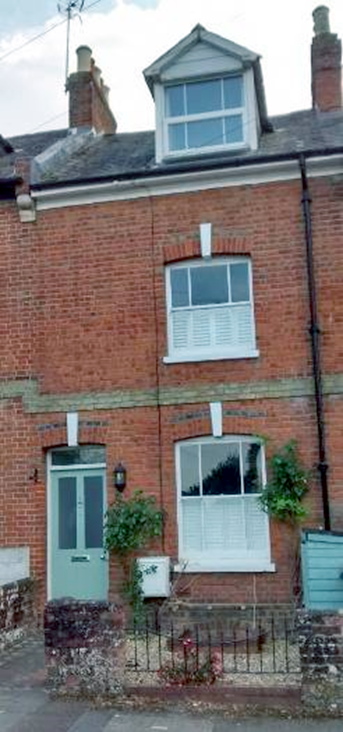
3, Avenue Road, Winchester
– Henry Churcher’s home in 1914
Great War Record
Henry enlisted with the 4th Battalion, The Hampshire Regiment on 16 September 1914. His brother Harold also joined up with the 4th Hampshires, probably on the same day judging by the proximity of their service numbers – Henry was 3303 and Harold 3311. Both brothers were assigned to the newly-formed 2/4th Battalion on 1 October 1914.
Two months later the 2/4th embarked for India, arriving on 11 January 1915. Home for the next two years was the British Army base at Quetta (in modern Pakistan) where the battalion trained in mountain warfare. Henry Churcher clearly displayed leadership qualities from an early stage because by October 1915 he had been appointed Company Sergeant Major of A Company. This made him the senior non-commissioned officer (NCO) in his unit. It was an important role with responsibilities that included administration and discipline. In combat, Henry’s main responsibility was the supply of ammunition to his company. Harold Churcher, meanwhile, had been promoted to Corporal.
On 29 April 1917, the 2/4th Hampshires left India for Egypt, reaching Suez on 15 May. Henry Churcher’s first experience of combat came in Palestine in November when the battalion was involved in follow-up operations after the Third Battle of Gaza. Henry then fought with the battalion as it formed the part of the spearhead of the advance through the Judean Hills towards Jerusalem, a period of fighting in which his brother Harold was wounded.
In May 1918, the 2/4th Hampshires transferred to the Western Front. Harold Churcher is thought to have recovered from his wounds by then and he and Henry were with the battalion in late July then they took part in a French counter-offensive against the Germans in the Ardre valley, north of the River Marne. In fierce fighting the battalion lost a total of 174 men killed and as many again wounded, but the Churcher brothers came through unscathed. In his history of the 2/4th Hampshires 1914-1919, the Commanding Officer, Lieutenant-Colonel F. Brook, wrote of the Ardre battle:
In these nine days the Battalion had borne itself in a manner which could not have been excelled by the oldest of veterans. It had learned that in war there need not be dismay when the task seems impossible, and it had shown to the rest of the Division that, as a Battalion and individually, in comparative method it was a force to be reckoned with. It was the Battalion’s first fight on the Western Front; a battle which, taken as a whole, was destined to be the turning point of the war and bring the end in sight. A considerable number of honours fell to the Battalion ... and there is not enough room to mention those who were worthy of mention. One might refer to Sergt. Major Churcher, who was a tower of strength to his Company ....
After just a fortnight’s rest Henry and Harold were back in action again around Behagnies and Beugnatre, north of the River Somme. By this stage, the Germans were retreating on much of the Western Front, but they continued to resist and their machine-gunners inflicted heavy losses on the advancing British. The 2/4th Hampshires suffered another 150 casualties.
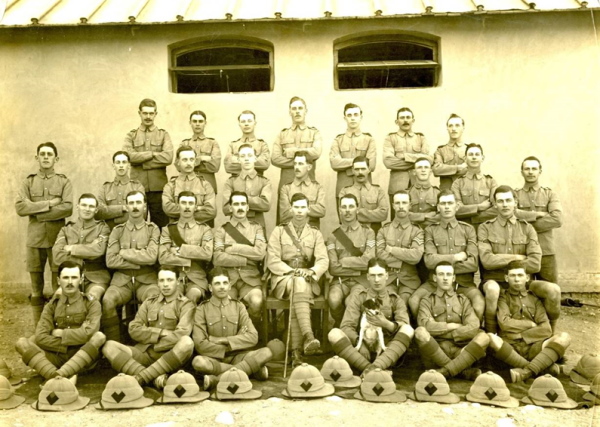
Officers and NCOs of the 2/4th Hampshires in India in October 1915.
CSM Henry Churcher is on the second row from the front, third from left
(Photo: Royal Hampshire Regiment Museum)
On 8 September, less than a fortnight before he died, Henry Churcher was presented with the Military Medal for his outstanding service on the Ardre. The award was given to soldiers below commissioned rank who had displayed ‘acts of gallantry and devotion to duty under fire’.
Henry’s final battle was the 2/4th Hampshires’ capture and defence of the village of Havrincourt between 12 and 14 September 1918. The initial attack cost the battalion 200 casualties and although it spent the following two days in reserve heavy German shelling killed or wounded nearly a further 100 men.
In his book The Royal Hampshire Regiment 1914-1918, C.T. Atkinson writes:
These two days [13 and 14 September] bought the total casualties up to nearly 300, including 2/Lt Bryant and 75 men killed and missing, among them CSM Churcher of A Company, an admirable Warrant Officer.
It is unclear precisely when Henry was wounded but he died at the 14th General Hospital on 19 September, aged 27. The Hampshire Regimental Journal of October 1918 states:
CHURCHER - On September 19th, at the 14th General Hospital, France, Company Sergt. Major H.T. Churcher, died of wounds, the dearly-loved eldest son of Mr and Mrs L. Churcher, 3, Avenue Terrace, Fulflood, Winchester. ‘God's Will be done’.
Company Sergt. Major H.T. Churcher, Hampshire Regiment, who died in a General Hospital in France on September 19th of wounds, received a day or two previously, was the eldest son of Mr and Mrs Lot Churcher, of 3, Avenue-Road, Fulflood, Winchester. C.S.M. Churcher, whose age was 27 last March, had been in the Army just four years, having joined a battalion of the Hampshires on September 16th 1914, and had been on service in India before going to France. He has two brothers serving in the Army.
Family after the Geat War
Harold Churcher survived the Great War and ended up with the rank of Acting Lance-Sergeant. Ernest Churcher also served in France as a Lance-Corporal in the Army Service Corps. He was wounded on 5 October 1918 but survived.
The Churcher family remained in Winchester after the war and maintained close ties with Fulflood. Henry’s parents both lived into old age. His mother, Elizabeth, died in Winchester in May 1944, aged 80, while his father Lot passed away on Christmas Eve 1954 at the age of 89.
Harold Churcher married Gertrude Goater in Winchester in 1922. Their son John had three children all of whom were born in the city. Two of these subsequently married in Winchester. Harold died in Winchester in August 1983, aged 91.
Ernest Churcher married Muriel Taylor in Winchester in July 1920. Muriel died in 1942 after which Ernest married Annie Fayne the following year. He was living at 54, Western Road when he died on 22 August 1959, aged 65.
William Churcher does not appear to have married. He lived in Fulflood for the remainder of his life and was at 19, Avenue Road when he died, aged 75, in 1975. Alfred Churcher married Dorothy Barratt in September 1929 and they had two sons. In 1939 the family was living at 85, Greenhill Road, with Alfred working as a plumber and fitter. He died in Winchester in June 1971, aged 67.
Medals and Memorials for Henry Thomas Churcher
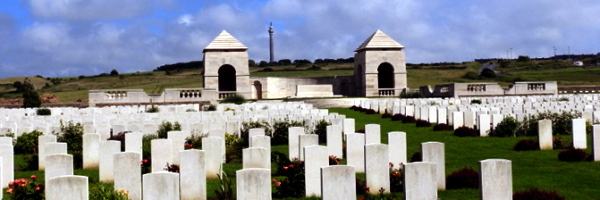
Terlincthun British Cemetery, Wimille, Pas de Calais, France
Company Sergeant Major Henry Thomas Churcher M.M. was entitled to the Victory Medal and the British War Medal. He is buried in Terlincthun British Cemetery (above), Wimille, Pas de Calais, France (GR. IV. B. 4.) and is mentioned on the memorials at St Matthew’s and St Paul’s churches in Winchester.